
Understanding the European Pharmacopoeia Changes to TOC System Suitability Testing
Understanding the European Pharmacopoeia Changes to TOC System Suitability Testing
The European Pharmacopoeia (EP) has introduced important updates to General Chapter 2.2.44, Total Organic Carbon in Water for Pharmaceutical Use. Effective from 1 July 2026, these revisions affect the reference materials used for Total Organic Carbon (TOC) System Suitability Testing (SST) and introduce a new testing approach for Sterilised Water for Injection (SWFI).
Although the analytical procedure itself remains largely unchanged, laboratories should understand how these revisions may impact them.
What has changed?
The latest revision to EP General Chapter 2.2.44 introduces two significant changes.
1. New Chemical Reference Substances (CRSs) for System Suitability Testing
The reagents traditionally used for TOC System Suitability Testing have been replaced with official European Pharmacopoeia Chemical Reference Substances (CRSs):
| Previous Reagent | New EP Reference Standard |
| Sucrose R | Sucrose for TOC Test CRS |
| 1,4 Benzoquinone R | 1,4 Benzoquinone CRS |
These CRSs are now the official reference materials specified by the European Pharmacopoeia for TOC System Suitability Testing.
2. A new TOC method for Sterilised Water for Injection
Secondly, a new Method B has been introduced for Sterilised Water for Injection (SWFI), replacing the historical Oxidisable Substances test with Total Organic Carbon (TOC) testing.
Method B also introduces container volume-dependent TOC acceptance limits.
What does this mean for pharmaceutical laboratories?
This revision primarily affects laboratories performing routine TOC System Suitability Testing for water used in pharmaceutical manufacture.
Historically, laboratories were able to comply with both EP 2.2.44 and USP <643> using USP Reference Standards for System Suitability Testing. Following this revision, the European Pharmacopoeia now specifies EDQM Chemical Reference Substances (CRSs) as the official reference standards.
The revisions for Purified Water and Water for Injection do not alter;
- the calculation or interpretation of Response Efficiency,
- or Limit Response.
- The analytical procedure,
- acceptance criteria, and
- pass/fail assessments.
The principal revision is the replacement of Sucrose R and 1,4-Benzoquinone R with their corresponding Chemical Reference Substances (CRSs). As a result, laboratories should not expect any changes to routine TOC calculations or instrument operation.
There may, however, be changes to which System Suitability Test is performed.
The revised chapter does not prescribe how frequently different reference standards should be used. EP 2.2.44 states that System Suitability should be performed at “suitable intervals”, while USP <643> states that it should be performed “periodically”. The choice of when to use USP Reference Standards, EP CRS materials, or both remains the responsibility of the user and should be supported by an appropriate scientific rationale within the Pharmaceutical Quality System.
Organisations choosing to use a single reference standard for routine testing should ensure that their approach is appropriately documented and justified. Depending on the implementation strategy adopted, supporting equivalency data may be beneficial during regulatory inspections.
Demonstrating equivalency
To better understand the practical impact of these changes, Altus Science is conducting a long-term equivalency study comparing System Suitability Tests prepared from USP Reference Standards and EP Chemical Reference Substances.
Initial results demonstrate that both starting materials produce equivalent System Suitability Test outcomes, as would be expected given their intended analytical purpose. Response efficiencies obtained using both material sources remain comfortably within the pharmacopoeial acceptance criteria.
How often should System Suitability Testing be performed?
The frequency of TOC System Suitability Testing remains, as it always has done, a quality system decision and should not be dictated by a third-party supplier.
Appropriate testing frequency should be established through risk assessment, considering factors such as historical system performance, instrument robustness, product risk and available supporting data. The rationale should be documented and retained within the Pharmaceutical Quality System.
Whilst Altus Science cannot determine testing frequency on your behalf, we are happy to discuss the technical considerations to help inform your implementation strategy.
Given that both USP and EP System Suitability Tests are expected to produce equivalent analytical outcomes, it may not always be necessary to perform both routinely. Many organisations may choose to demonstrate equivalency initially before continuing routine testing using a single reference standard. Others may prefer to alternate between USP and EP materials or to perform both tests as part of their ongoing quality program.
The most appropriate approach will depend upon your individual quality system, risk assessment and regulatory expectations.
How Altus Science can help
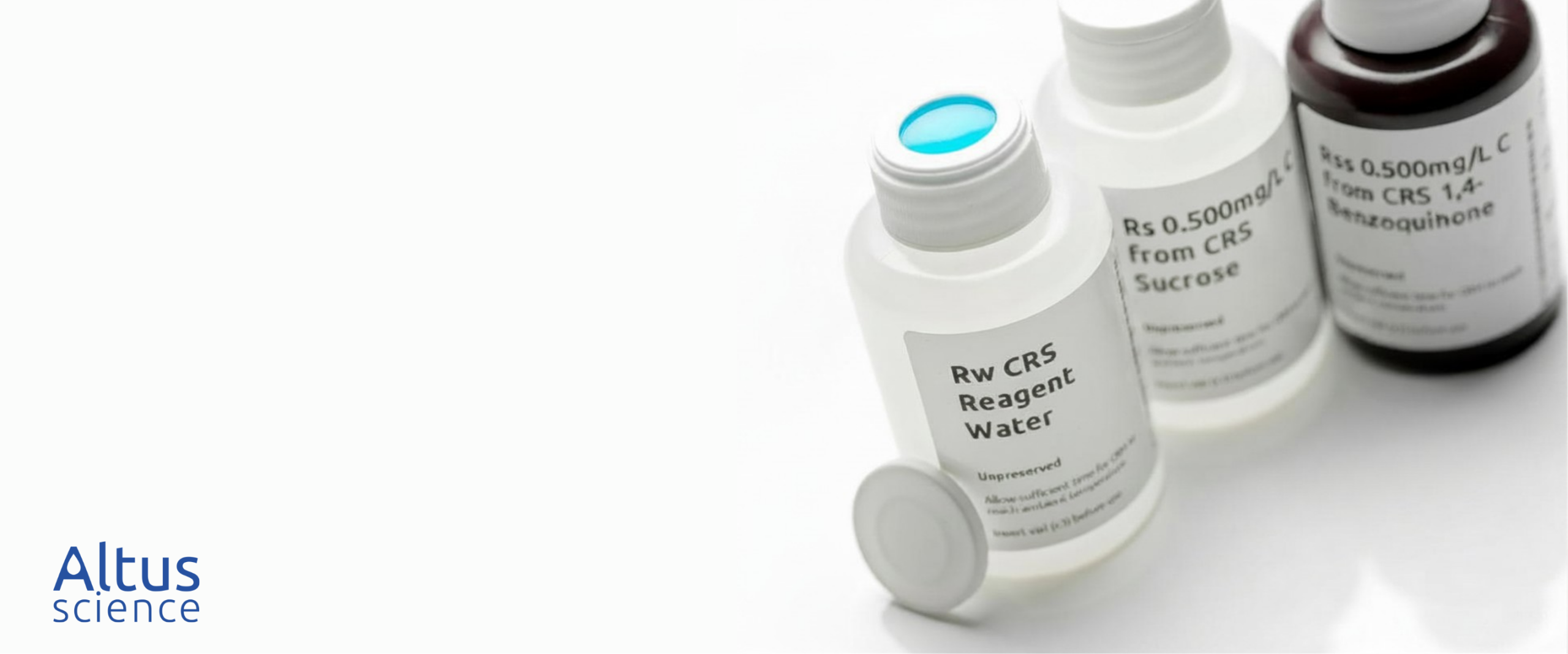
Altus Science now supplies separate USP and EP CRS System Suitability Kits, allowing customers to implement whichever testing strategy best aligns with their quality system.
Our EP System Suitability Kits are manufactured from official EP Chemical Reference Substances and are produced under our ISO/IEC 17025 and ISO/IEC 17034 accredited quality systems.
Preparing for the new requirements
Although these revisions do not fundamentally change TOC System Suitability Testing, they provide an opportunity for laboratories to review their current procedures.
If you’re planning your transition to the revised EP 2.2.44 requirements or would like to discuss the most appropriate testing strategy for your laboratory, the Altus Science technical team is always happy to help.